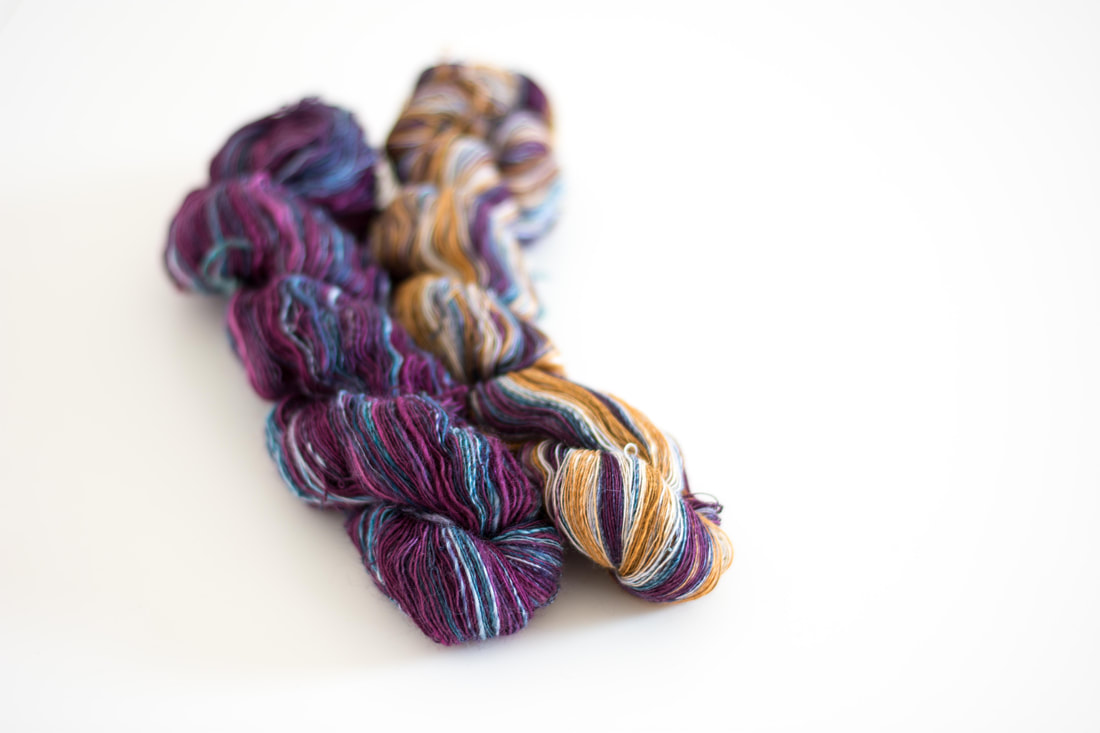
 For the last couple of weeks, I've taken a break from spinning my hand-dyed fiber to spin Barry's Jubilee - a collaboration between Schacht and Sweet Georgia Yarns. I bought a total of three braids, and I'm spinning them all a little differently. For the first braid, I spun it just as it came. (This is the skein on the right in the photo above.) This braid was spun with a short backward draft, which is a worsted spinning style. This style tends to result in smoother, denser yarn. This yarn was also very consistent in thickness across the skein - no slubs here! I spun this yarn quite fine - about 80 wraps per inch, and got almost 1,000 yards from just 4 ounces. 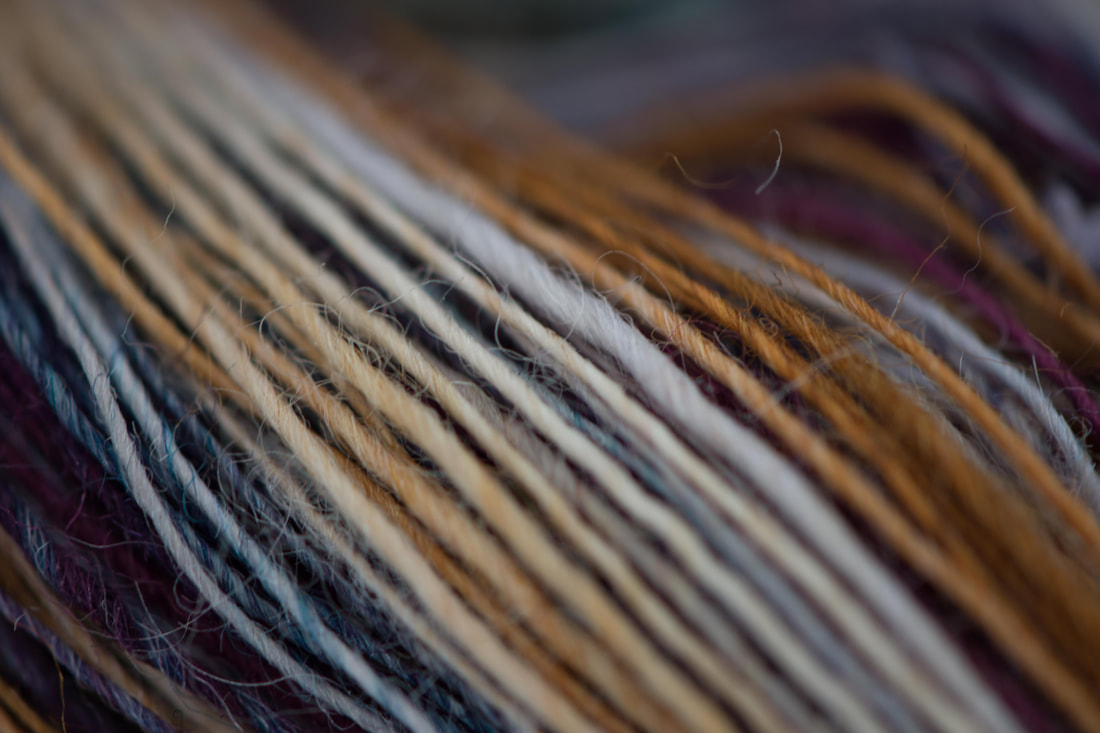 With the second and third braids, I split them into three sections by color - mostly blue/purple, gold, and white. First up in the spinning was the purple/blues, shown at the left in the top image and on the bottom in the image below. This one was spun with a long draw - a woolen spinning technique that is my favorite way to spin. Other than separating the braids by color, I didn't manipulate the fiber before spinning. Spinning a woolen drafted yarn from combed top resulted in a yarn that is noticeably loftier, and has a little bit more variability in thickness than the worsted skein. I didn't track the thickness of this yarn while I was spinning it, but I estimate that it's probably an average of 50-60 wraps per inch. From about 3 ounces (all the purples/blues from two braids), I got about 700 yards of yarn. 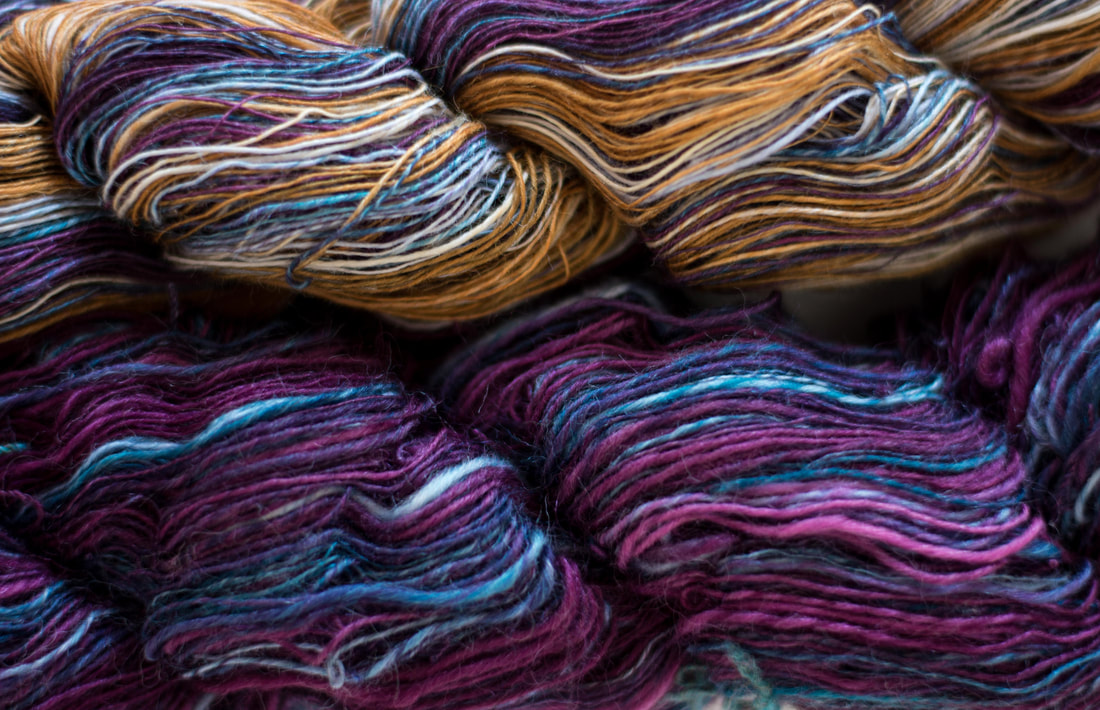 Next, I carded the golds together, and added in some stash fiber - a mix of Falkland dyed gold and some unbleached Tussah to maintain that golden tone. Using my spinner's multitool, I dizzed the fiber off my drum carder into roving, and am working on spinning it up now. I expect it to be similar in texture to the purple yarn, if not a little bit loftier still, since it was carded.
I carded the remaining bits of mostly white fiber with undyed merino and bleached tussah silk. There were puffs of blue and gold on the ends of the white fiber from the braids, and the resulting blend has a gorgeous silvery tone to it. I'll most likely spin it like I'm spinning the gold fiber - more to come soon! 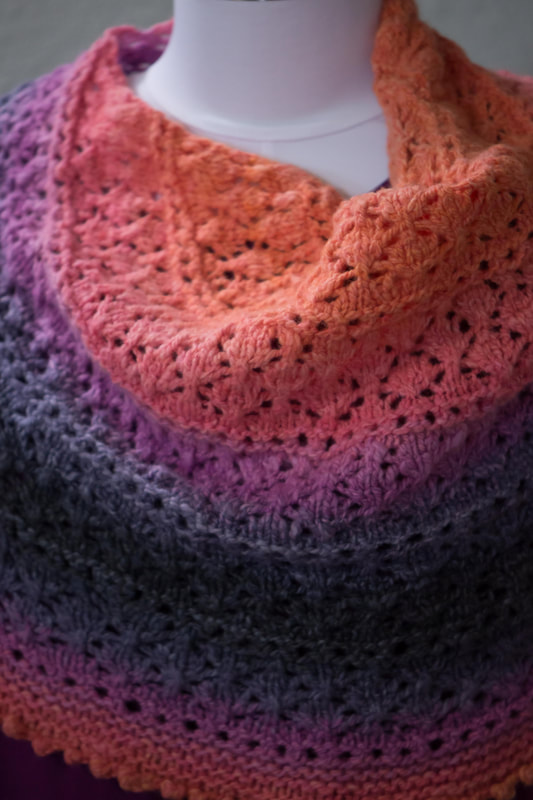 You know those moments where you think, I have nothing to knit? There usually followed by thoughts of I have no yarn, which is just silly if you've seen the size of my stash. Anyways, that's what happened to me a couple of weeks ago, when I knew there was going to be lots of time spent standing around and waiting. I needed a knitting project that was going to be more engaging than my standard socks, but easy enough that I could carry on a conversation while working on it. Several years ago, I bought the pattern for Starshower, and that's what I cast on with my recently finished Monsoon Sunset spin. I liked that the pattern would preserve the gradient nicely. I liked the shape of the garment, as it drapes in a way that is very similar to how I wear most of my shawls, but without the fuss of having to tie, pin, or worry about the thing coming off. I'm not sure what led me to pair this yarn with that pattern, but I did, and I had a fun project to entertain me in the nick of time. As so often happens with handspun yarn, it wasn't exactly the yarn the pattern called for. My yardage was right, but the gauge I was getting was way too dense for a cowl with some drape. So I ripped back and went up a needle size. I also decided that I wasn't a huge fan of all those slipped stitches, and switched to a lace pattern. 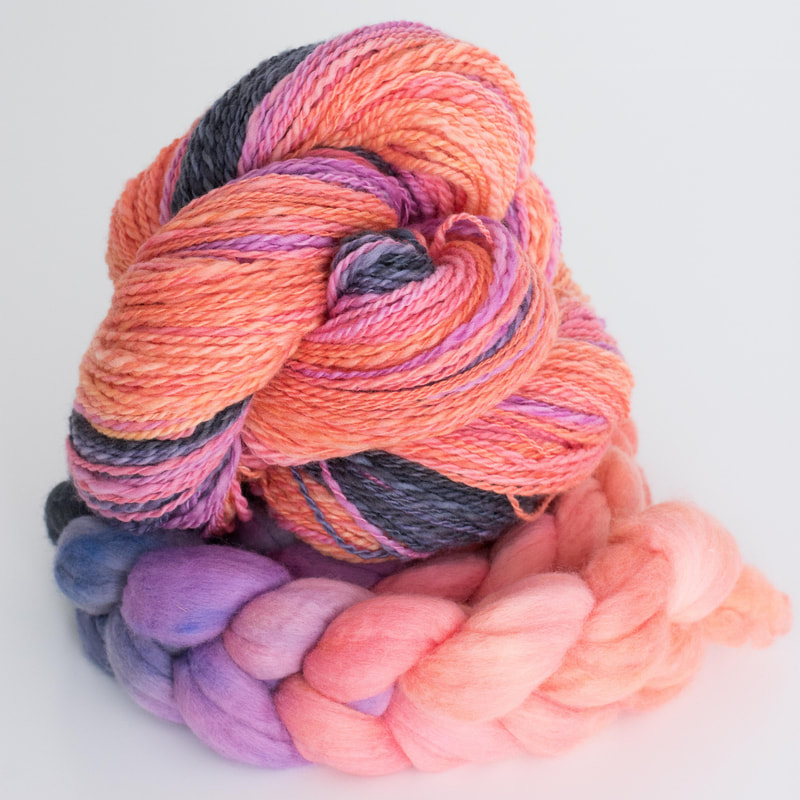 Because I do everything the hard way, I essentially re-wrote the pattern to accommodate the lace pattern I liked. (I didn't realize that the designer, Hilary Smith-Calais, has quite a few cowl patterns in similar shapes, some with lovely lace patterns!) The resulting cowl is comfy and cozy and fun, although now it's going to get packed away for the rest of the summer. It's a scorcher over here and our a/c just broke! 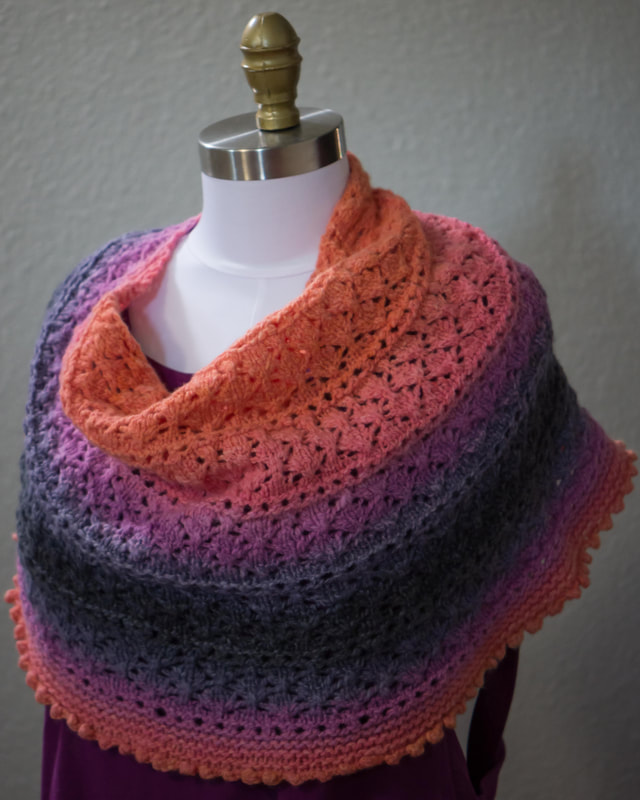 If you're interested in how I re-wrote the pattern, my Ravelry project page is here, with detailed notes.
Want to spin your own? Monsoon sunset is available in my shop as a 6 oz braid! Last weekend, I was having dinner with some of my friends after we had visited the Estes Park Wool Market. I had just purchased a raw fleece, and three of us had recently been gifted with one raw fleece each. The eternal question came up - "Why bother with processing a fleece from start to finish when you can buy lots of really good fiber that's already cleaned and ready to spin?" I was stumped, in part because I didn't have one answer. I had at least ten. There are lots of reasons to process your own fleece, from raw wool to finished yarn. Here are some of mine: 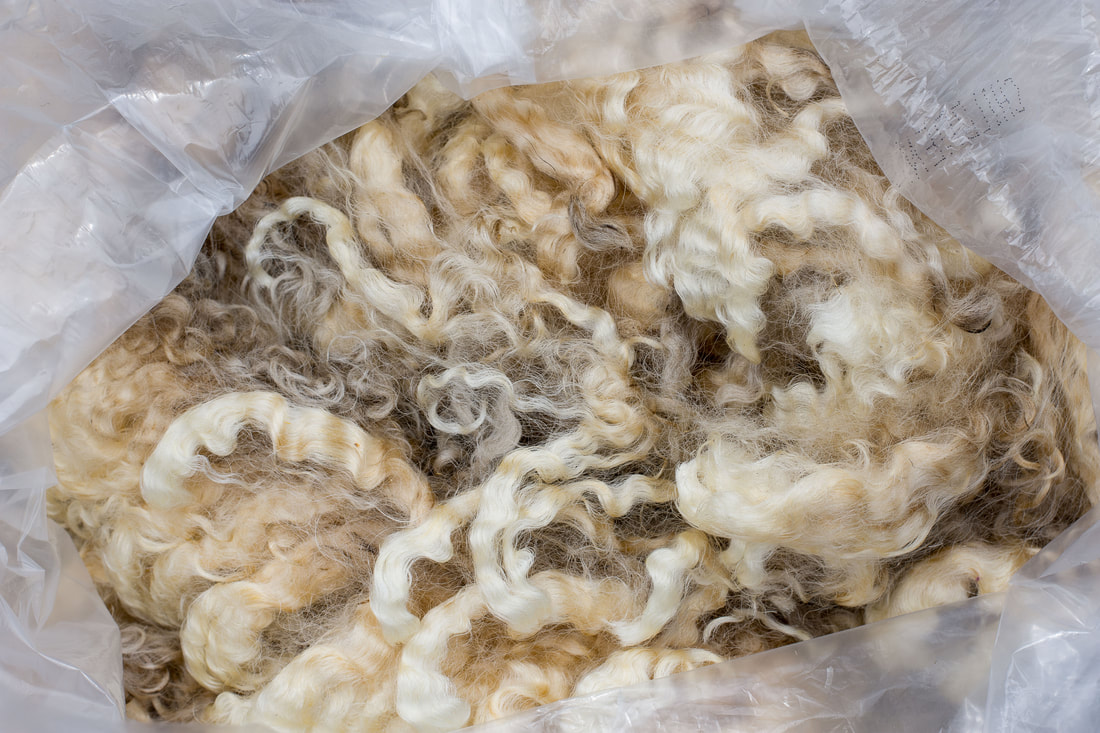 1. To Say You've Done It I tend to have a strong urge to try new things, especially when it comes to fiber arts. Sometimes, having tried a new skill, I can say, "been there, done that, what's next?" That was the urge behind buying my first fleece, and it's a perfectly valid reason to try it. If nothing else, you'll have gained (yet another) post-apocalyptic life skill! 2. It's a Different Part of the Process to Enjoy Wool is the original miracle fiber. It's warm, elastic, durable, resists staining (but takes dye beautifully), breathes well, and is fire resistant. I love the feel of it in my hands, whether it's when I'm spinning, knitting, weaving, felting, or rug hooking. When I buy a raw fleece, I get to extend my enjoyment of the process. 3. Learn More About the Process Every time I process another raw fleece, I learn something new about spinning. How does this sheep's wool behave? What will it look like as yarn? What uses would make it really shine? It also makes me appreciate processes that were a normal part of life for people working with textiles in the pre-industrial era - and it makes me really appreciate my water heater! 4. Learn What to Look For in a Fleece There are plenty of guides that tell you how to buy a fleece, but there's nothing like the experience of following all the advice and then using the wool to see if it's something you like. The more fleeces you process, the easier it will be to look at a raw fleece and make a buying decision! 5. Get Exactly the Fiber Prep You Want There is nothing in the world like fiber that has been hand combed or hand carded well. It is easier and fluffier to spin. You can easily create roving or combed top that fits your own hand, not a thickness that is optimized for industrial production. You can also experiment with combed vs. carded preparations. Some fibers are usually only available as one or the other. What would happen if you did it another way? Combing and carding yourself gives you the opportunity to experiment and see what you like best. 6. Participate in Your Local Fibershed This is a big one! When you buy a raw fleece from a shepherd, you are helping them offset the cost of raising sheep. If that shepherd is local to you, then you're also participating in your local fibershed - building communities, building soil, building local economies - all buy buying a raw fleece. That raw fleece I bought at Estes Park? It was from a sheep raised by a high school student. She was working in the booth, and she knew her stuff! She knew the qualities of each fleece, whether it would be best for spinning or felting, and much, much more. Did I need another fleece this year? Probably not. But I did fall in love with the fleeces she showed me, and I wanted to encourage her to continue to raise sheep. That's just not something we can do by ordering commercially processed spinning fiber online. 7. It's Less Expensive (Sometimes) I'll be honest here, most of the fleeces I buy cost more per ounce than commercially processed fiber. What's up with that? It's because of the "wool pool," which is meant to help shepherds sell their wool clips (even low grade wool) instead of composting, burning, or throwing it away. The trouble is that the prices shepherds get in wool pools are often so low, they don't recoup the cost of shearing. Then the fiber is all tumbled together by "class," and shipped to a mill that is often overseas, processed, and shipped back. The system is a high cost to the farmers and a high cost to the environment. A fleece that costs a little bit more per pound than commercially processed fiber has a lot of value added to it. For one thing, you know your yarn is coming from one sheep that was carefully raised, rather than many nameless sheep. Often, the fleece has been coated to make your scouring, carding/combing, and spinning easier. And again, most importantly, you're helping to support a local farmer. Sometimes, a free fleece comes my way, and then the dollar cost is definitely lower. These fleeces usually require a higher investment of time and energy to get ready for spinning, but can yield some amazing results. 8. Use Breeds You Can't Find Online Sometimes, it' really hard to find certain breeds of wool online. They are less populous, and less popular, than the wools that most dyers are selling. But you might be surprised by the variety of breeds you can find in fleece form in your local area. This is a great way to sample different types of wool. 9. Amuse Your Dog (and Your Neighbors) When I scour fleece, and when I card/comb a clean fleece that still has lots of vegetable matter, I do it outside. My dog loves this, since he gets to sniff a stinky fleece, then run in circles in the backyard for hours on end. My neighbor also gets some amusement watching the dog, and I love showing her the difference between a clean and dirty fleece. I consider it a small bit of fiber education! 10. Gray Water Makes Great Fertilizer Cleaning a fleece takes a lot of water. Luckily, it doesn't all have to go to waste. I usually fill a large container with about 20-30 gallons of cold water, and soak a fleece in that for a few hours. This releases a surprising amount of dirt, including poop. Then I remove the fleece, and have water and fertilizer for my plants. Since I live in the desert, this is an important way to help conserve water and take care of my yard at the same time. 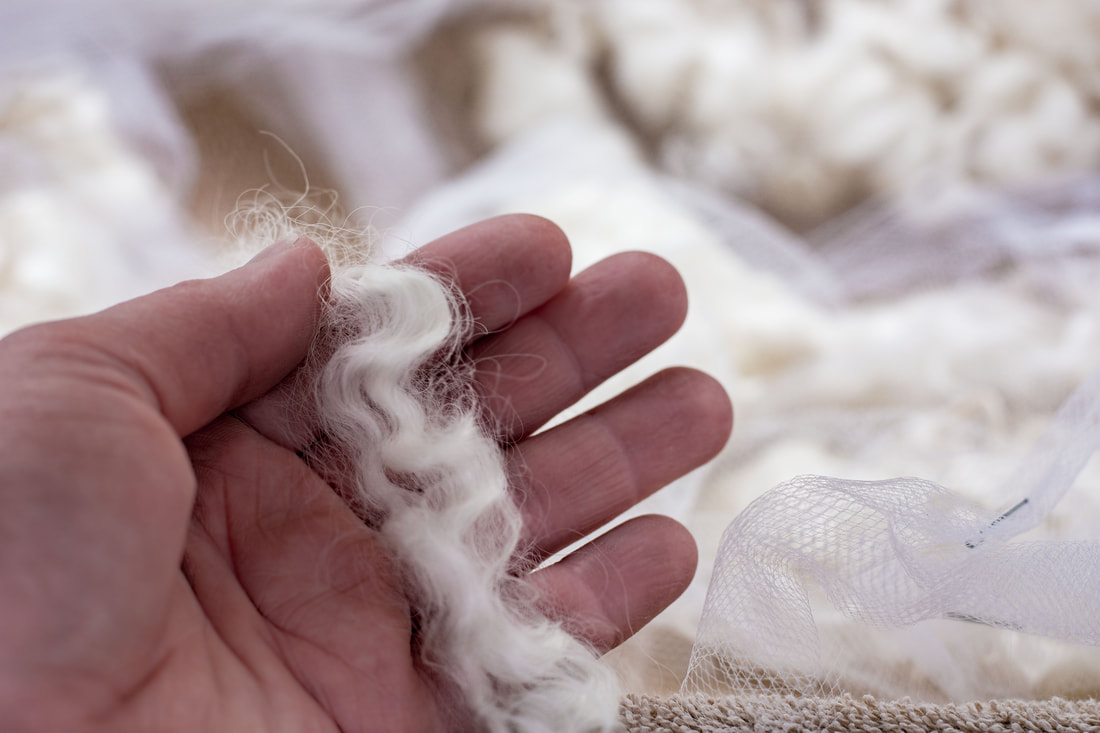 Lastly... There's nothing quite like a pile of clean wool drying in the sunshine! (This is the same fiber that is pictured as a dirty fleece at the beginning of this post!)
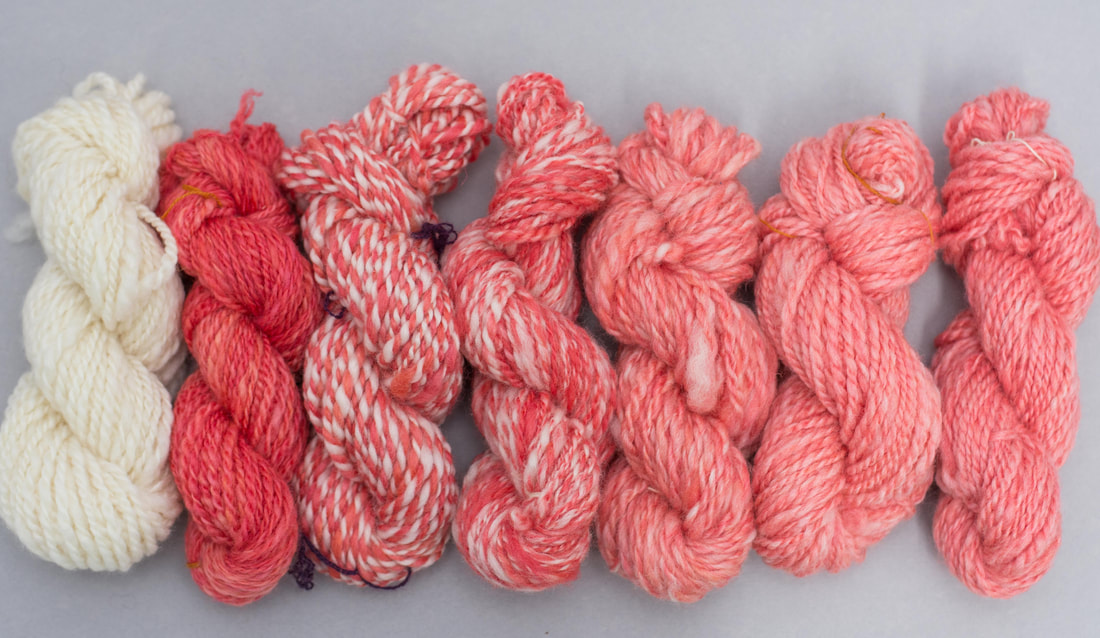 Here are the results of the drum carding color blending experiment! From left to right:
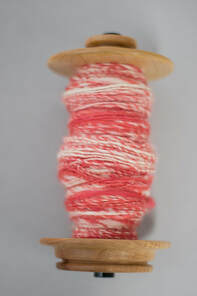
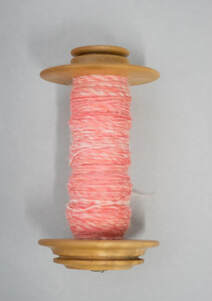
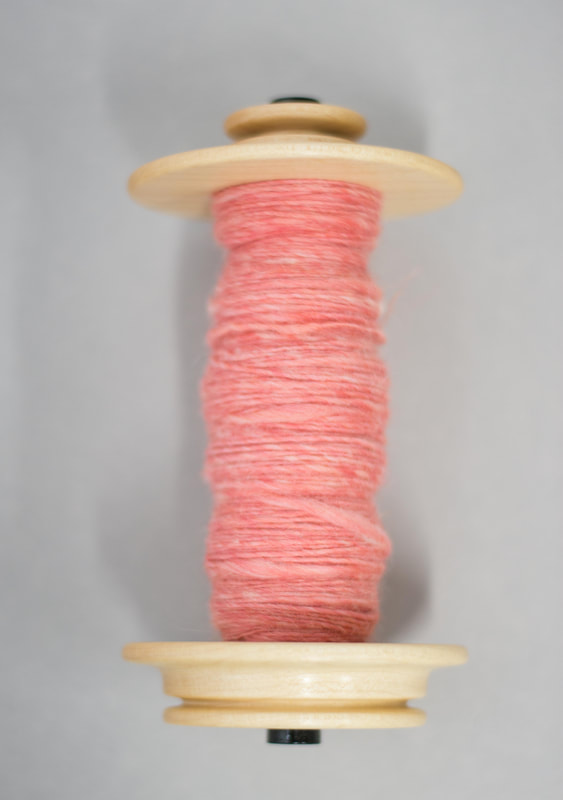
All the fiber is Bluefaced Leicester, spun with a short forward draw. I was going for a little bit thicker than my "default" yarn, but I didn't try too hard to make sure that all the weights were the same, so there is definitely a little bit of variation in thicknesses and ply twist. One thing that I wasn't expecting is that because the first three didn't get put on the drum carder at all, they retained the alignment of industrial combed top, and therefore have more luster, while the ones that went through the drum carder look fluffier. It's a perfect example of the qualities that divide worsted and woolen yarns. Since I typically use 2-ply yarns, that's what I spun for, which technically adds another layer of color blending. Here are the singles on the bobbins for reference: 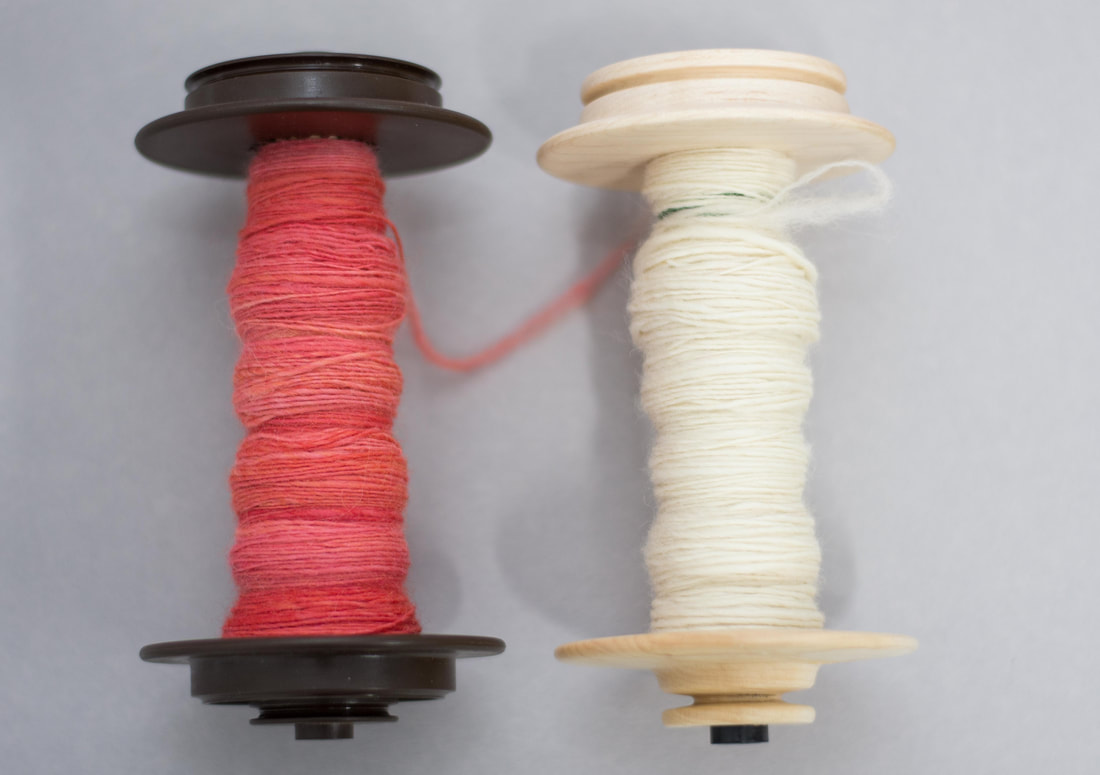
I do want to emphasize that none of these yarns is "right" or "wrong." It's all about what you want out of your yarn. I can think of times where I want lots of barberpoling and variegation, and other times when I would want a more even look. There is still a bit of variegation visible with the last yarn (three passes on the drum carder). It's a pleasant heathery look that I tend to love, but if I wanted complete blending, I might send the fiber through the drum carder for a fourth pass. Now on to the last step - knitting and weaving with the yarn to see how that affects the color blending! 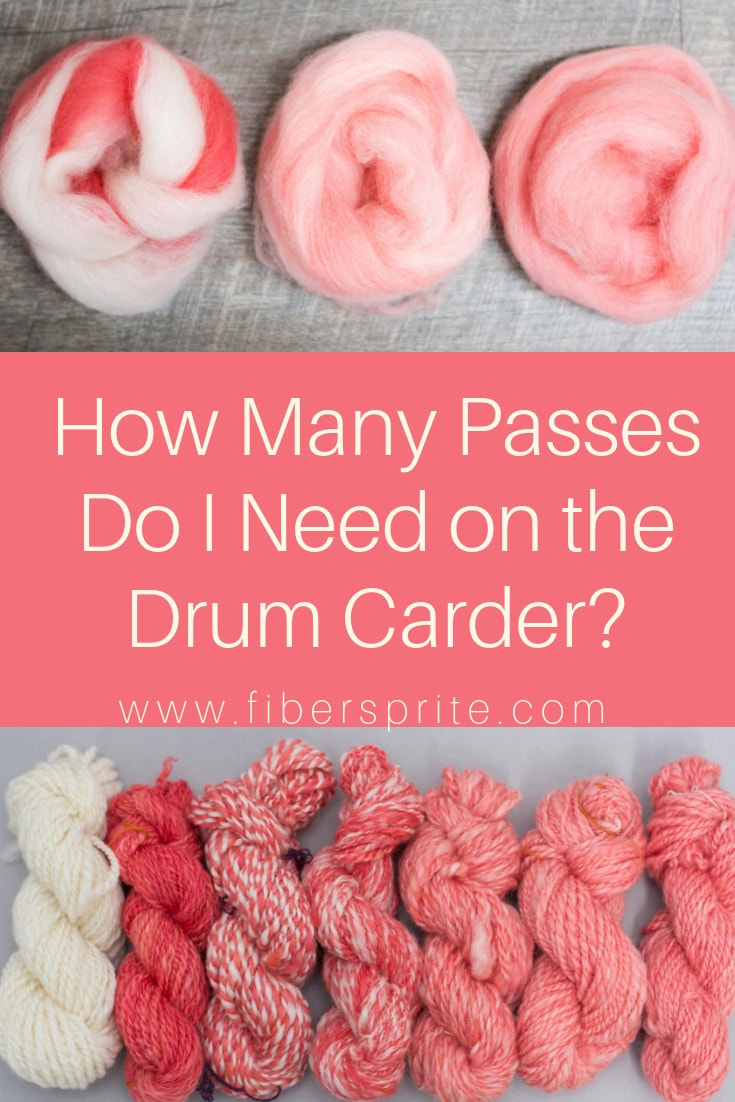 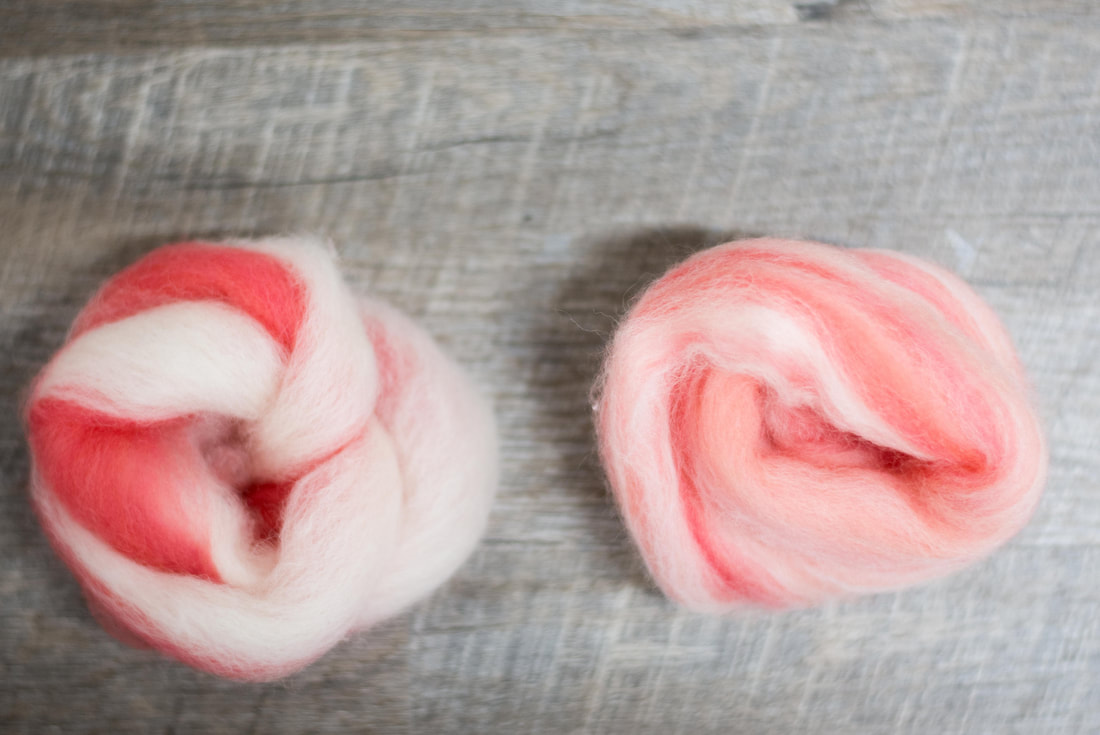 One of the things I love about using a drum carder to prepare fiber for spinning is how easy it is to blend different fibers and colors. When I first learned to use the drum carder, the "rule of thumb" was that you needed three passes on the drum carder. While I found this to be true when processing fleece, I often want to combine colors and textures from commercially prepared roving. Would I need to follow the three pass rule if the fiber has already been perfectly aligned? Generally, the more times you put fiber through the drum carder, the more thoroughly blended the fiber will be. Other things affect the blending too - like how many layers of color you use. In the photograph above, both balls of roving have been through the drum carder once - but how I fed the fiber in made a huge difference. On the left, each color was fed in as a single layer. On the right, I alternated colors frequently, which resulted in much more blending from the first pass. 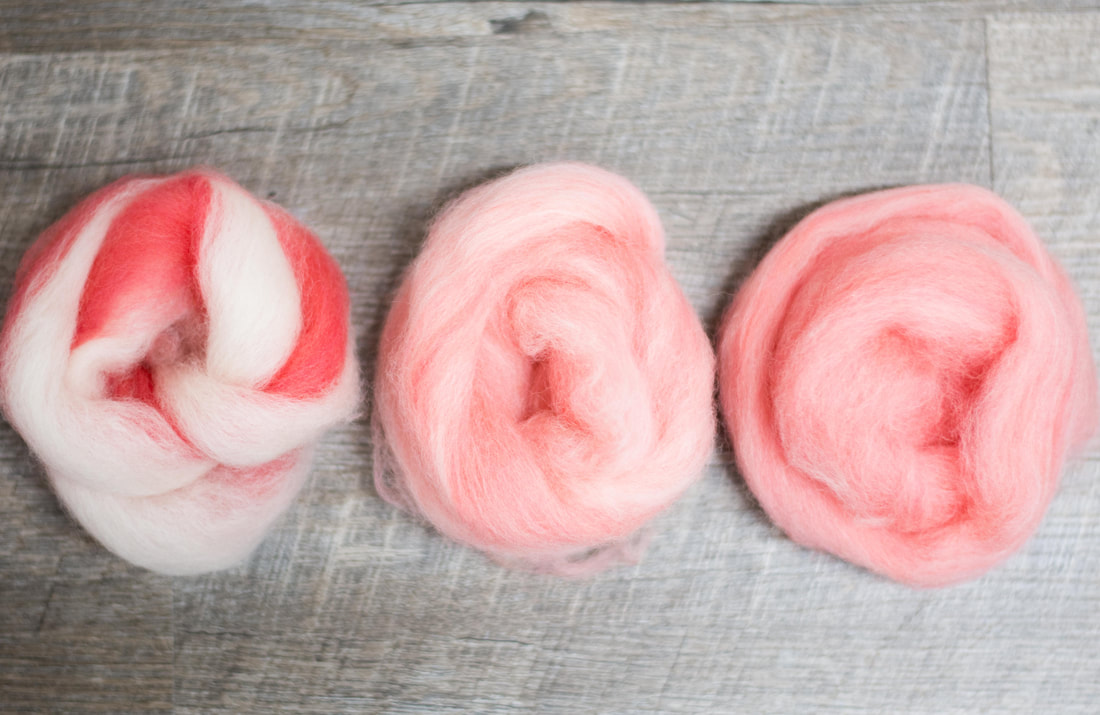 In the photograph above, you can see the progression of blending. On the left is some roving that has been through the drum carder once, with each color fed in as a single layer. In the middle, the roving has been through the drum carder twice, and on the right, the roving has been through the drum carder three times. In this experiment, there wasn't a huge difference for me between the fiber that had been through the drum carder two and three times.
So how many passes do you need on the drum carder? It all depends on what effect you're trying to achieve in your yarn. Stay tuned to see how each of these spins up! |
Archives
January 2024
Categories
All
|
 RSS Feed